



April 14, 2026
A New York City Home Transforms into a Two-Part Sanctuary
D
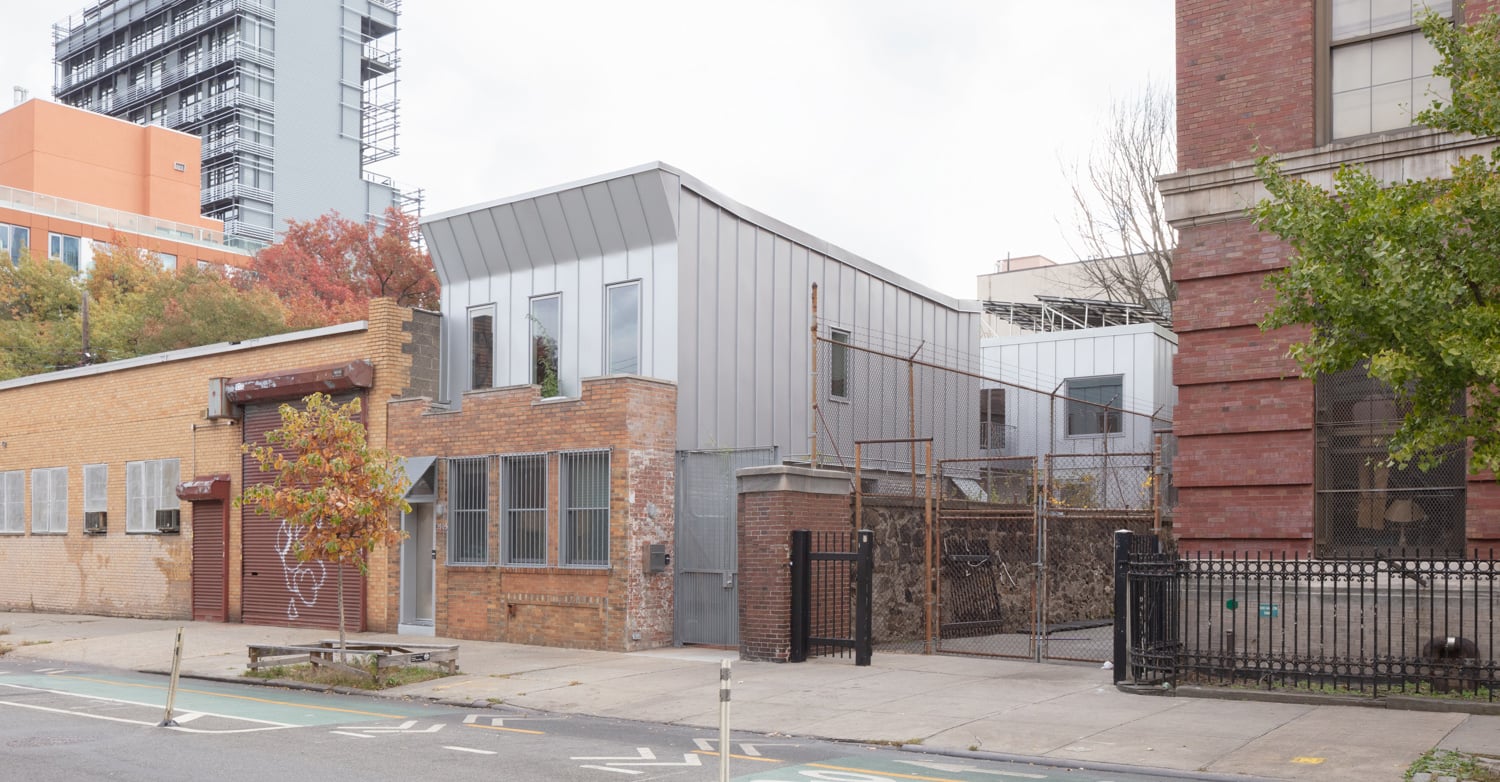
utch Kills, a section of Long Island City in western Queens, is as materially and functionally eclectic as any New York City neighborhood. Streets are lined with a mix of low-slung brick warehouses still buzzing with industrial activity, multifamily row homes, parking lots, and the occasional hotel or condo—a sign of ongoing development. On one characteristically motley street, a home has transformed into something worthy of the area: both subtle and stark, deferring to the existing materiality while capitalizing on the surrounding aesthetic permissiveness.
Doubling Down on Adaptive Reuse
“We wanted to preserve the Queens qualities of the house,” says Chris Leong, a founding partner of the firm Leong Leong, which was tapped for the renovation by an urbane curator-writer couple, Carin and John, who purchased the two-structure property. An emphasis on maintenance, the clients’ own unassuming and thrifty demeanor, and a shoestring budget guided the project, leading to the decision to retain key aspects—including the footprint and structural foundation, much of the internal layout, and even swaths of original surfaces—a rare instance of restraint in a gut renovation.
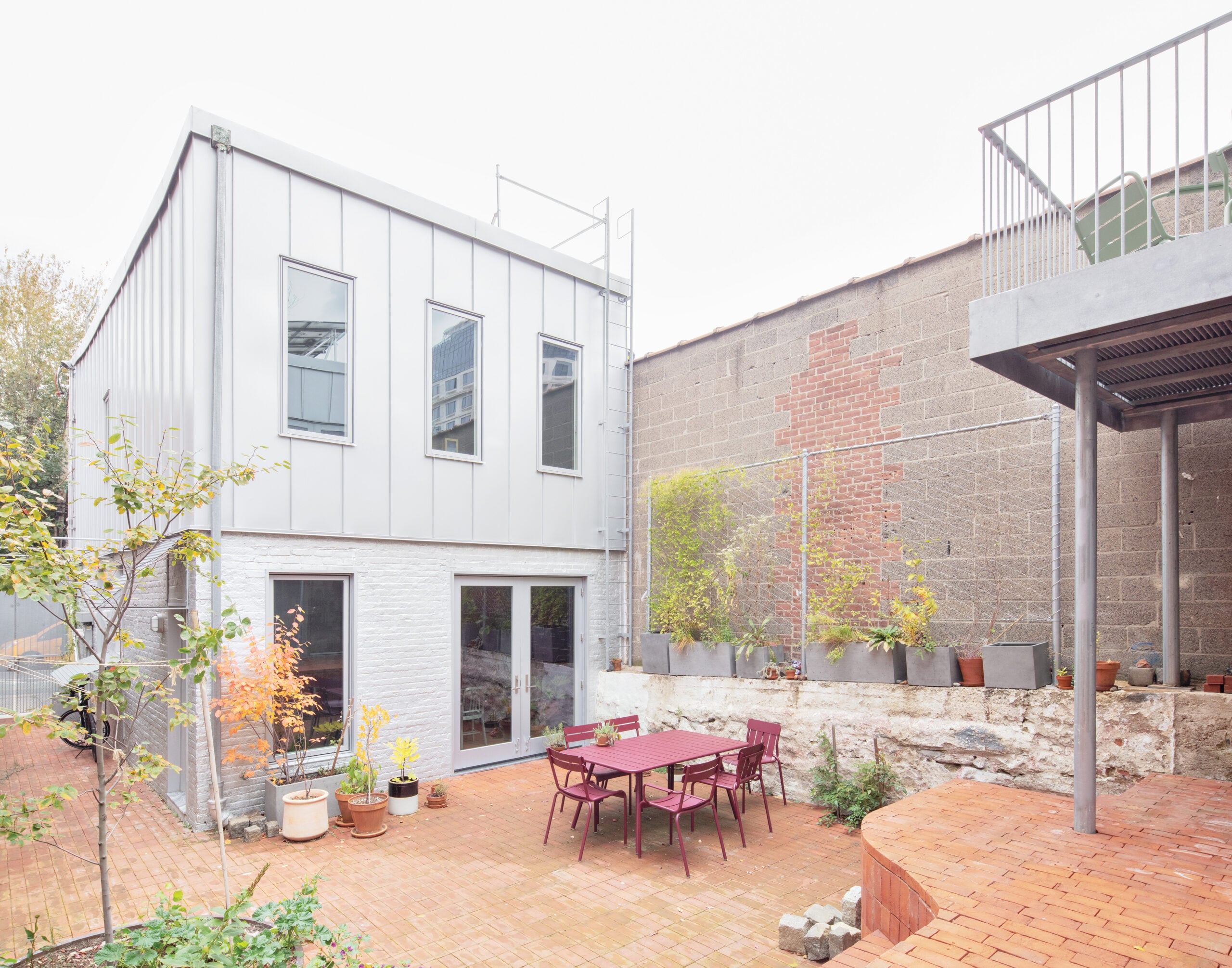
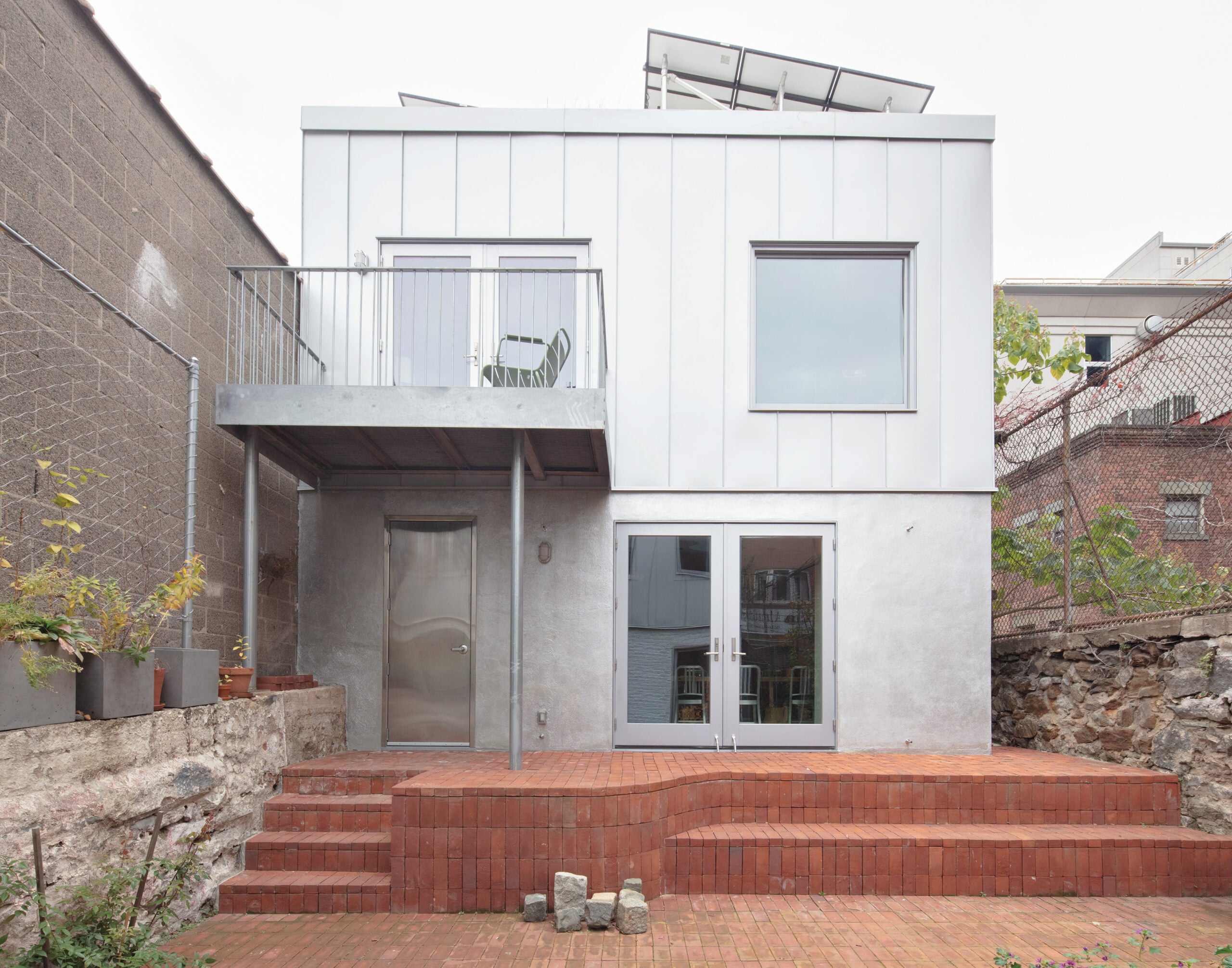
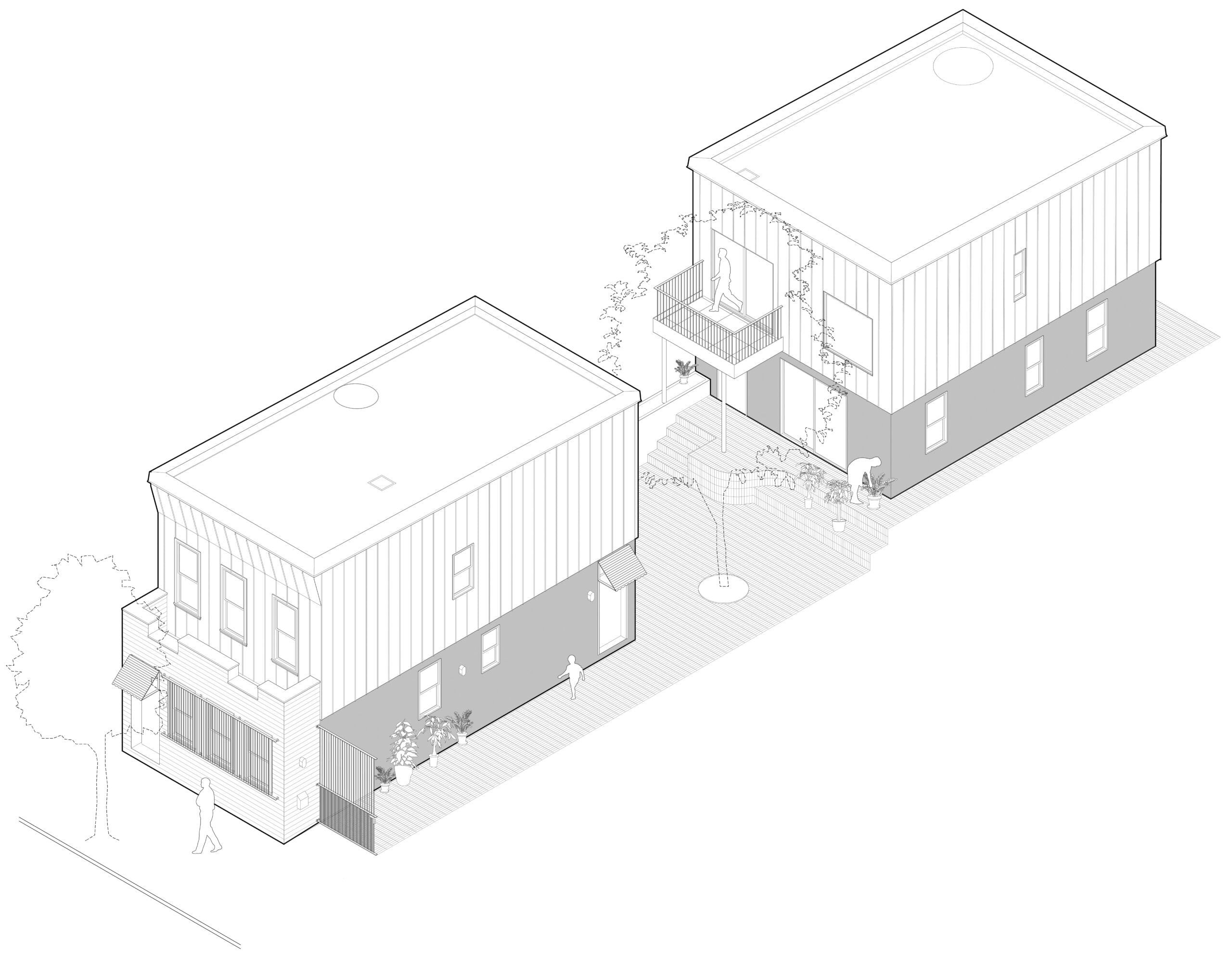
Though the unprepossessing, quintessentially Queens brick frontispiece was left largely unchanged, the exteriors of both structures behind it are now awash in a refined, unifying gray-silver paint on the first floors and standing-seam cladding on the second. “We wanted to preserve texture but make the front and back structures feel cohesive,” says Leong.
Staying Connected
Between the two houses is a red-brick-covered patio, which the team expanded by removing an external staircase that had previously connected the upstairs floor, once a separately accessible unit. John compares the outdoor space to a forum, capable of hosting community gatherings. “We’ve had events here, and it works great.” Hemmed in on all sides, the patio is accessorized by plantings—most prominently a large shadbush—enabling unobstructed sightlines between and even through the two houses.
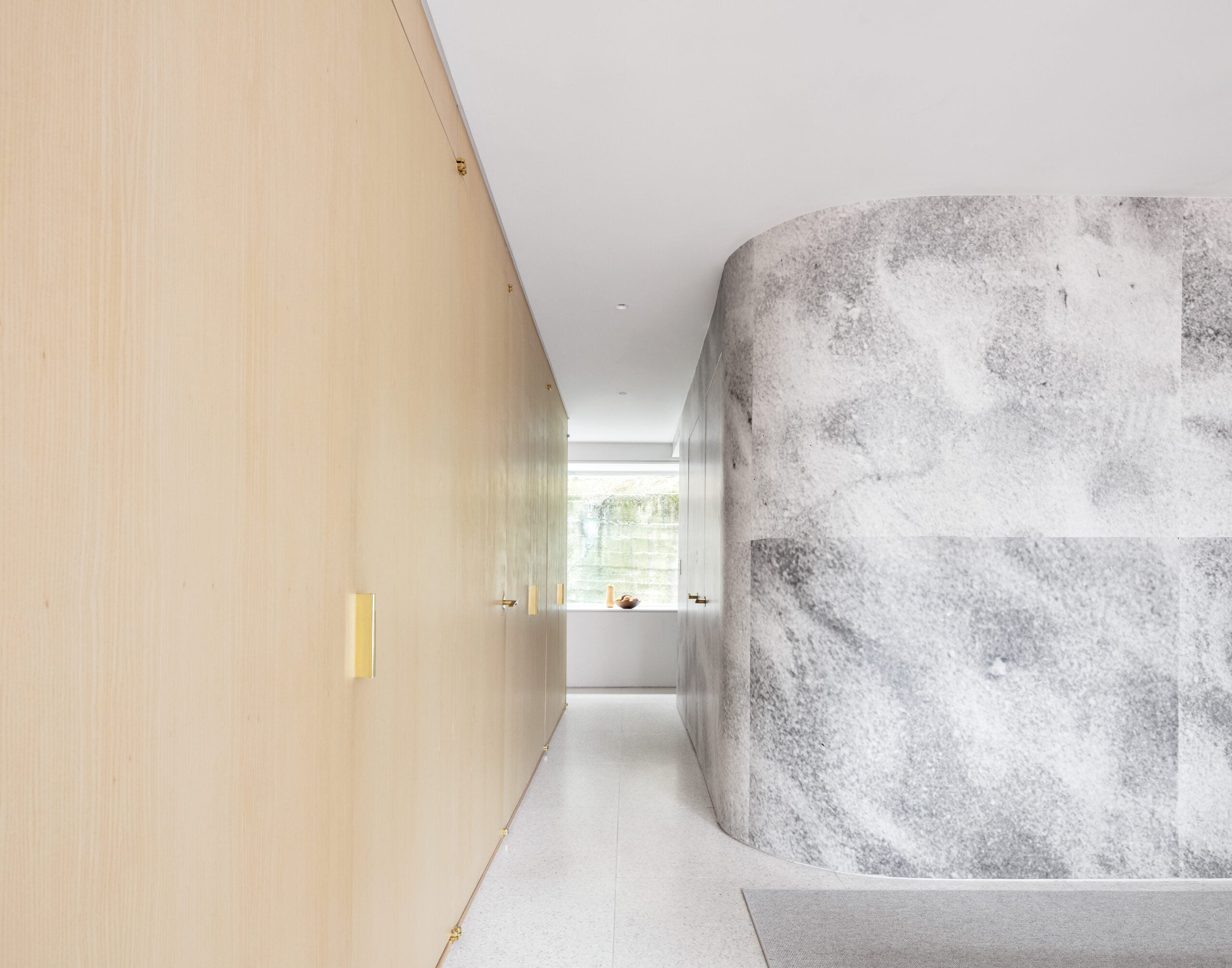
The back house, where domestic functions are concentrated, is where the firm’s lush material palette and the couple’s aesthetic sensibilities merge: Wood storage lining the wall, door hardware from John’s parents’ apartment, and a custom 1994 Felix Gonzalez-Torres wallpaper similar to one at the couple’s former loft, all demonstrate an attention to efficiency and density without sacrificing a domestic and personal feel.
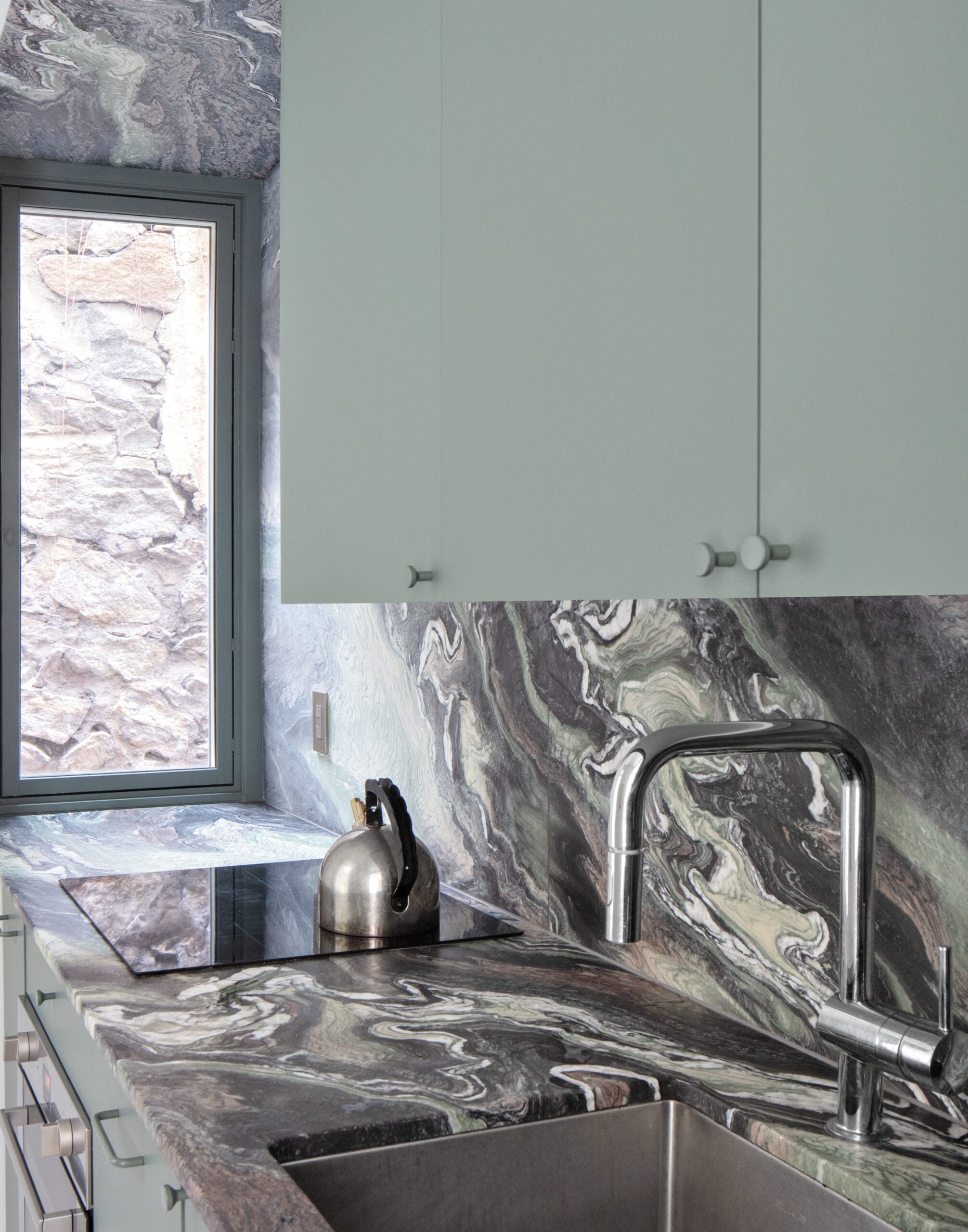
At the rear of the back house, the kitchen’s sage-green cabinetry and marble surfaces echo the narrow alleyway just outside, created by the gap between the house and its rear neighbor, which sits a story higher. It’s an earthy, residual space, furnished sparingly with a single, excess offcut of kitchen marble mounted as a snug bench. “The grotto,” as Carin fittingly calls it, “is incredibly mysterious and exciting.”
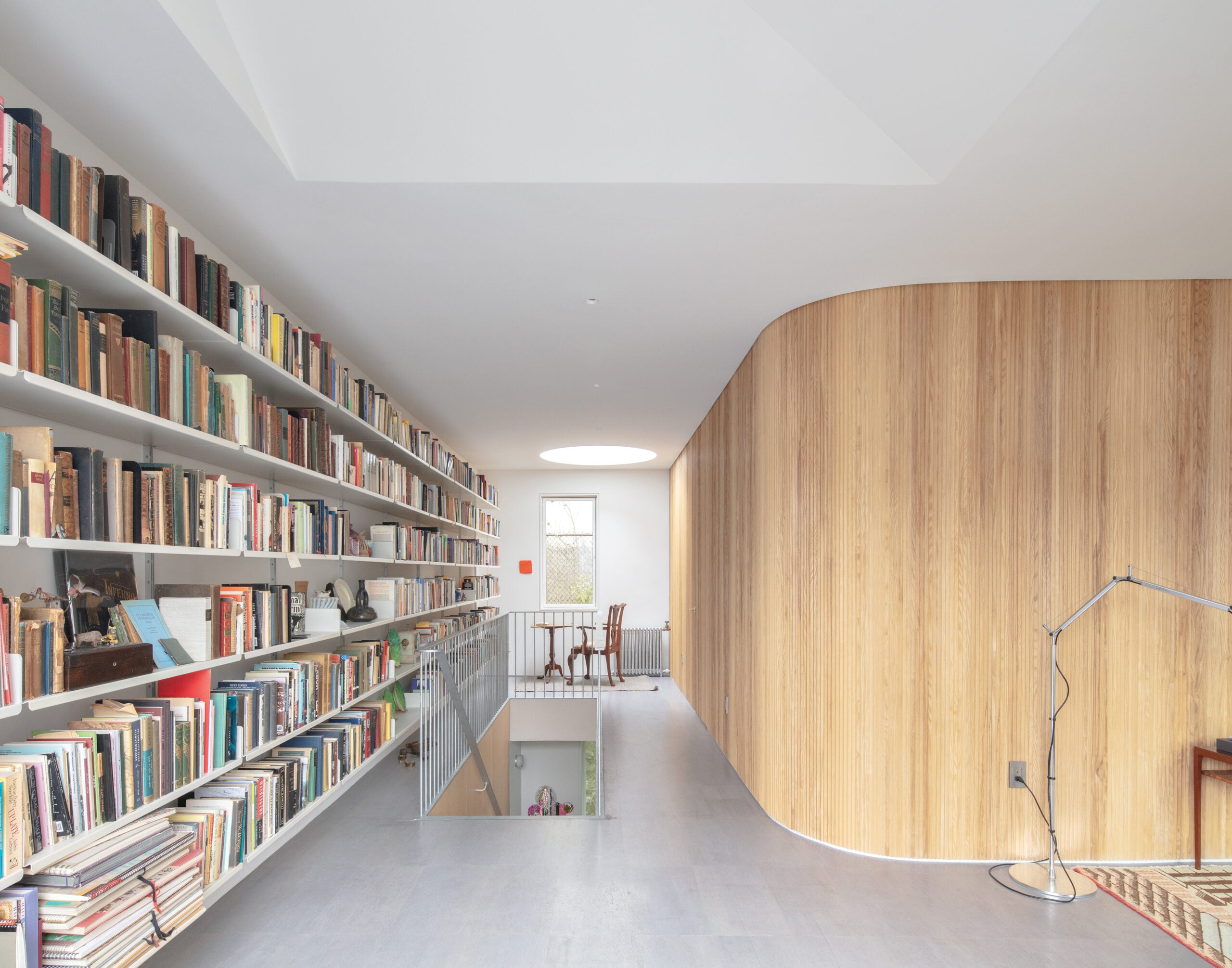
Upstairs, flashier features include a curved wall of Tambour paneling that separates the living room from the bedroom and closet and, according to Carin, “adds to the sense of fluidity and modular space.” The space is awash in light: A new circular skylight spotlights a reading nook below, and an original square skylight was retained—a midconstruction improvisation.
Functionally Flexible
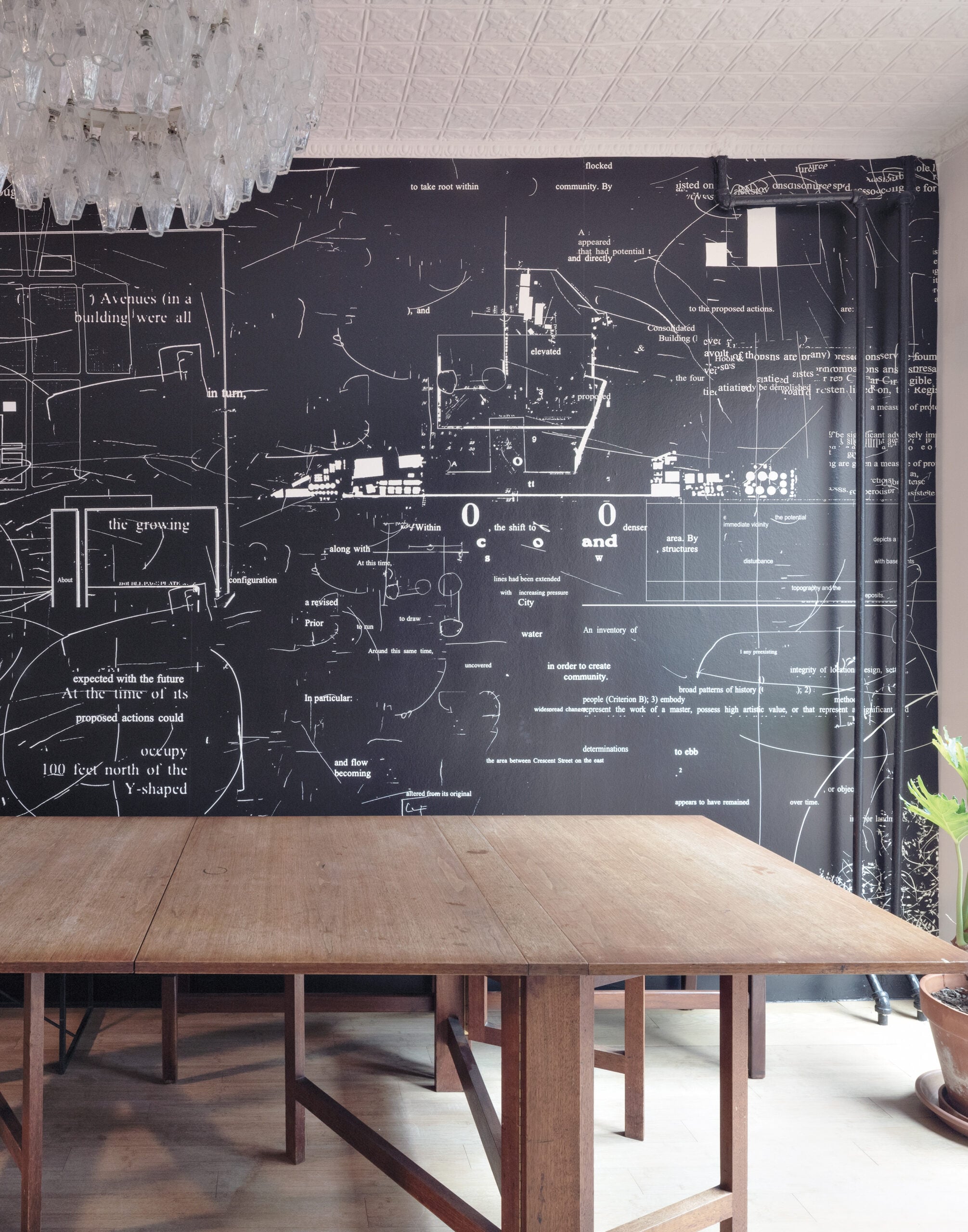
The front house received a lighter touch, serving as a crucible of the project’s careful management of budget, flexibility, and conservation. “A lot of what we did was uncovering and revealing,” Leong says—wood floors and the ground-level tin ceilings were mostly preserved. The house contains a large studio on the second floor for visiting artists and other guests. A large dining table, a large-format mural from the artist Kameelah Janan Rasheed, and two kitchens add to a peripatetic, hostel-like atmosphere. “They wanted the front house to be adaptable, enabling it to be used by multiple users and guests,” Leong remarks.
It also holds the couple’s offices. Carin’s, on the second floor, is frenetic and bright, with original wood floors and what they describe as an outdoor loggia atop the frontispiece. Below, in John’s street-facing office, the marble wrapping the back house’s kitchen and forming the grotto bench makes yet another appearance, this time as his desk. “There was a lot of design that was happening in real time,” Leong says, referencing the unplanned retention of skylights and wood and the found uses for excess stone. “This house was the little house that could.”
Would you like to comment on this article? Send your thoughts to: [email protected]
Latest
Viewpoints
Detroit Month of Design: A City’s Work in Progress
Now in its 16th year, the celebration offers insights into the Motor City’s ongoing accomplishments without glossing over its hurdles.
Projects
How a Hybrid Building Helped an Historic Manhattan Congregation Remain in Place
On Billionaire’s Row, FX Collaborative designed a new home for Calvary Baptist Church combined with an office tower.