




March 10, 2026
In Vancouver, The Butterfly Redefines High-Rise Living
Revery’s The Butterfly, a 57-story residential tower rising above Burrard Street in Vancouver’s downtown peninsula, is significant less for its sculptural form—wrapped in shimmering, prefabricated glass-fiber–reinforced concrete panels—than for how it challenges the assumptions that typically shape luxury housing. Who it serves, how it engages the public, and the responsibilities it accepts as part of the city are what make it truly distinctive.
Developed by Vancouver-based Westbank, the project merges market-rate condominiums with community-oriented programs like the restoration and expansion of the historic First Baptist Church, a seven-story rental building that includes both below-market and social housing, and—beneath and around the tower—childcare facilities, community kitchens, counseling rooms, gymnasiums, and spaces for emergency food and shelter programs.
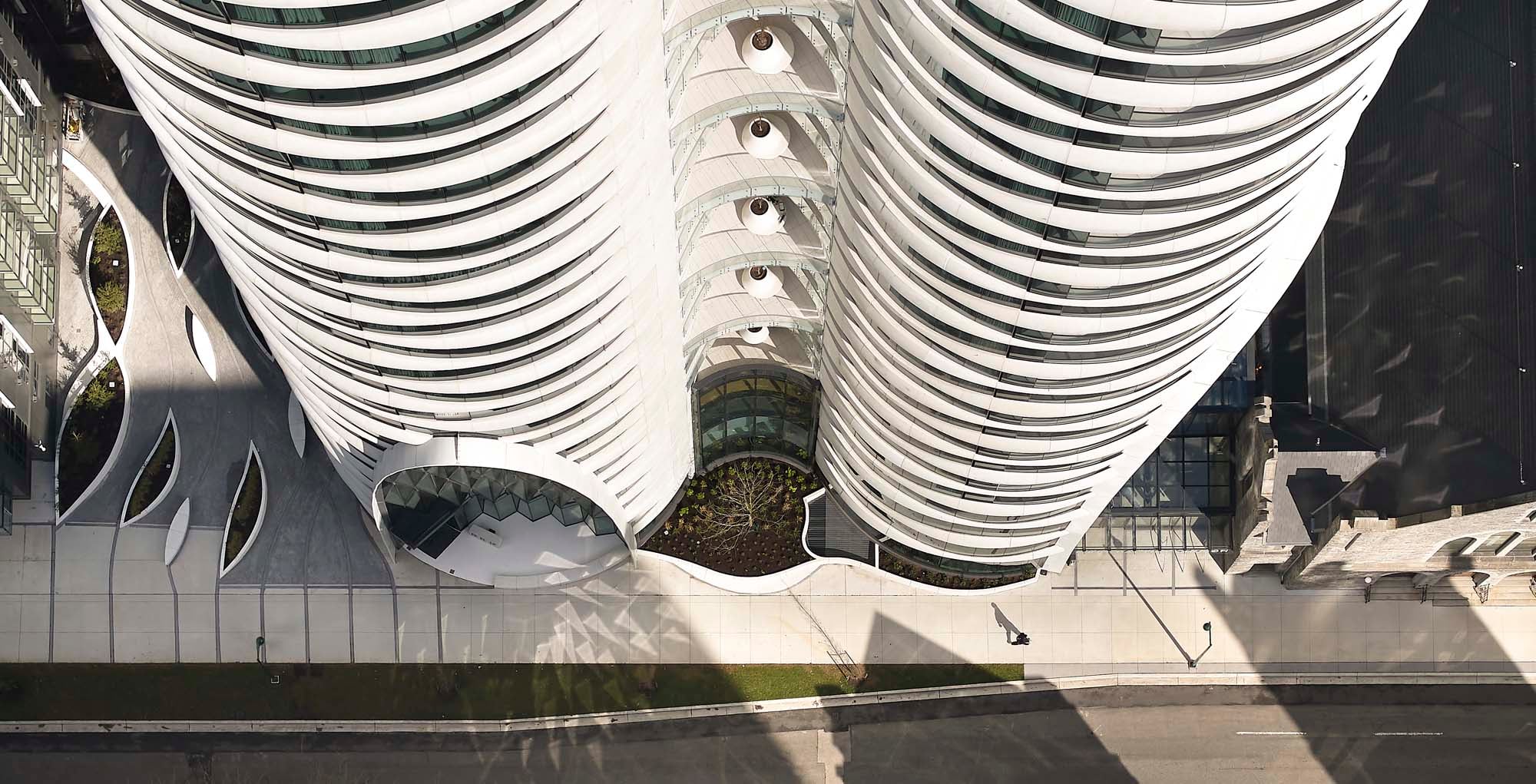
A Tower Rooted in Community
“It’s a community building—different incomes, different people, different programs living together,” says Revery principal Venelin Kokalov.
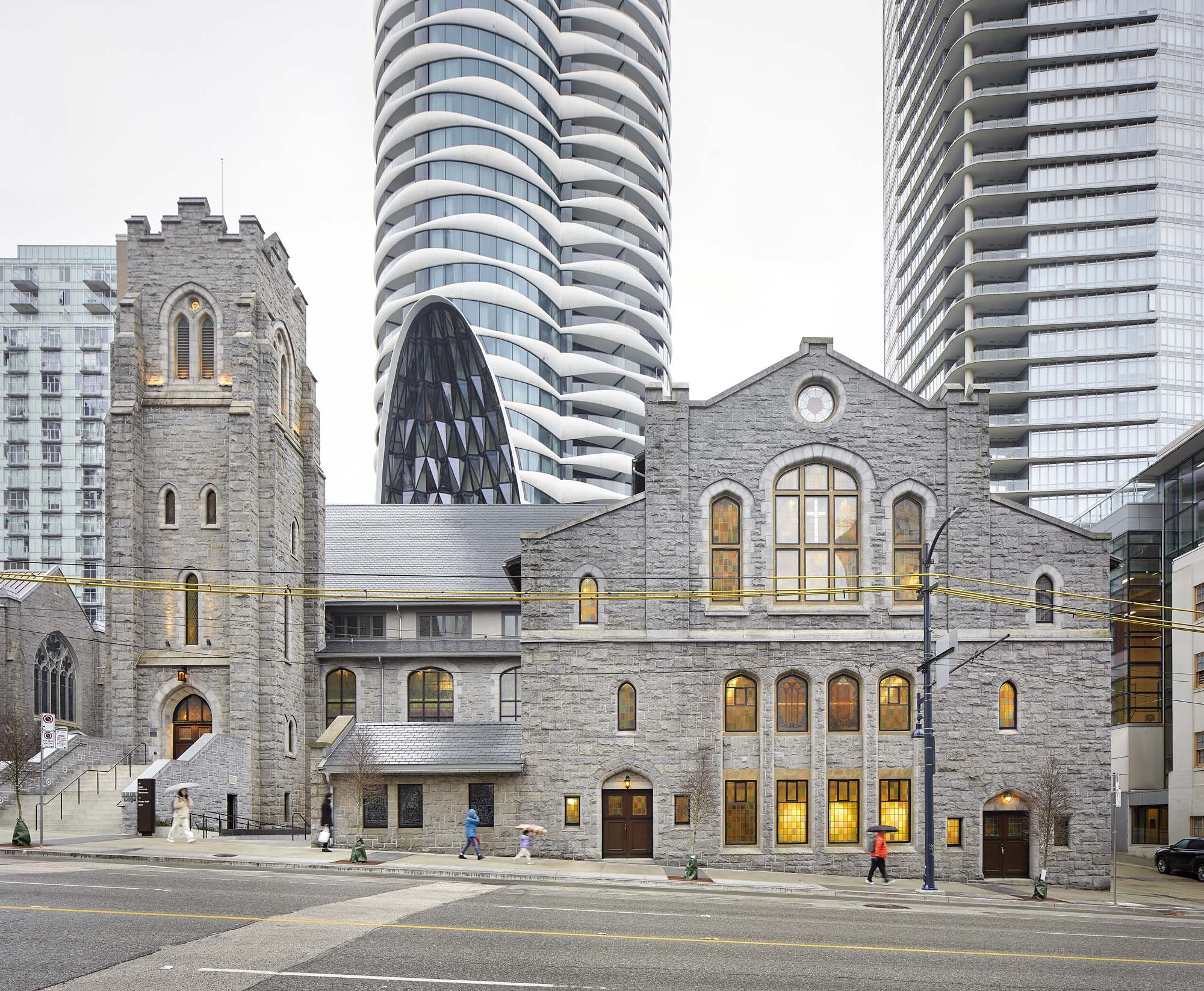
That integration is most apparent at ground level. Instead of landing the tower on a conventional podium—a move that Vancouver has become all-too well-known for, notes Kokalov—the building steps back and carves out courtyards, public outdoor gardens, and a transparent galleria that links to First Baptist and accommodates informal performances and gatherings. Mediating between the verticality of the tower and the finer grain elements below, the structure’s first few levels facing the street are wrapped in a crystalline glass facade, with sharply angled planes of glass shifting in scale and orientation as they rise.
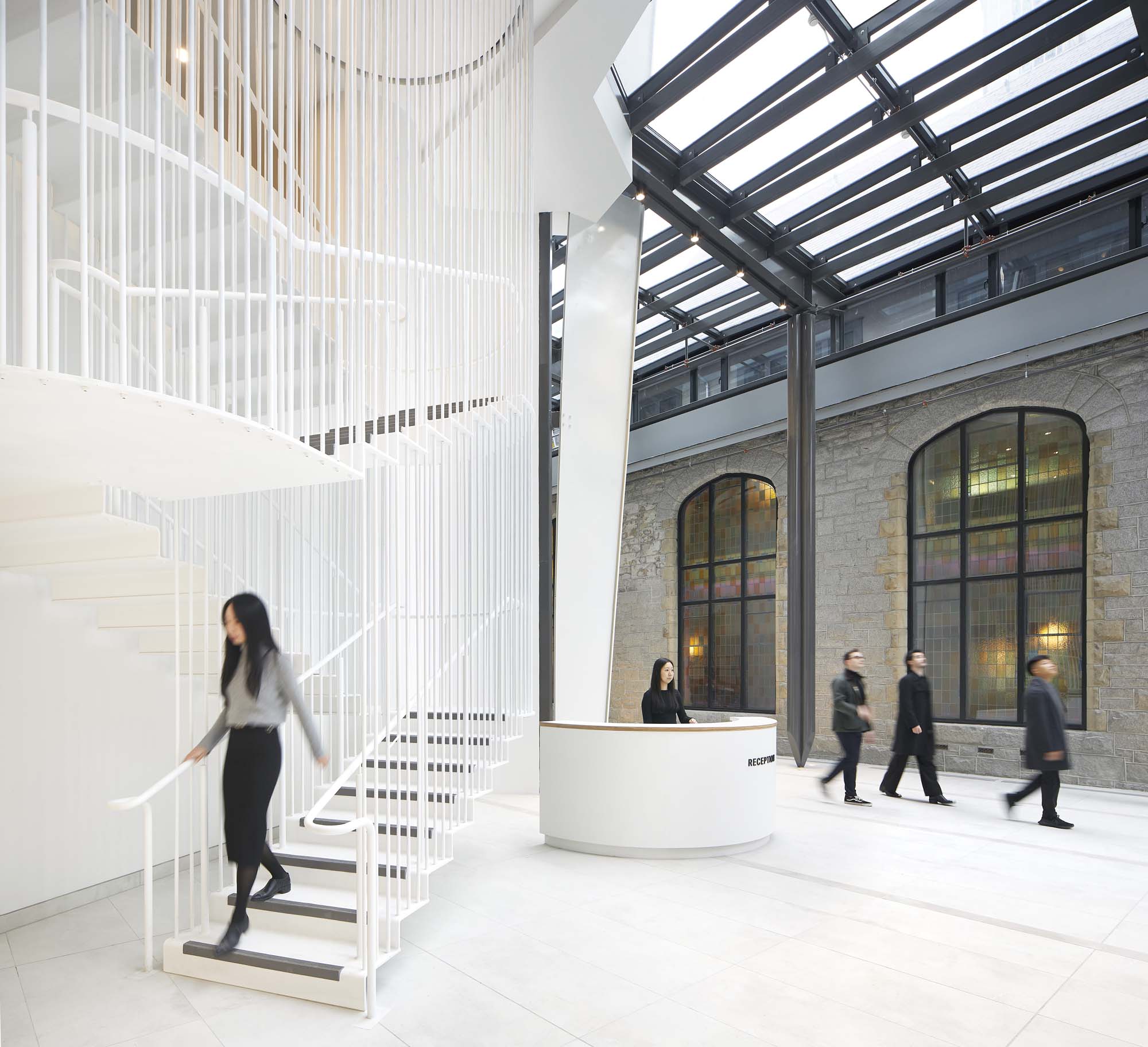
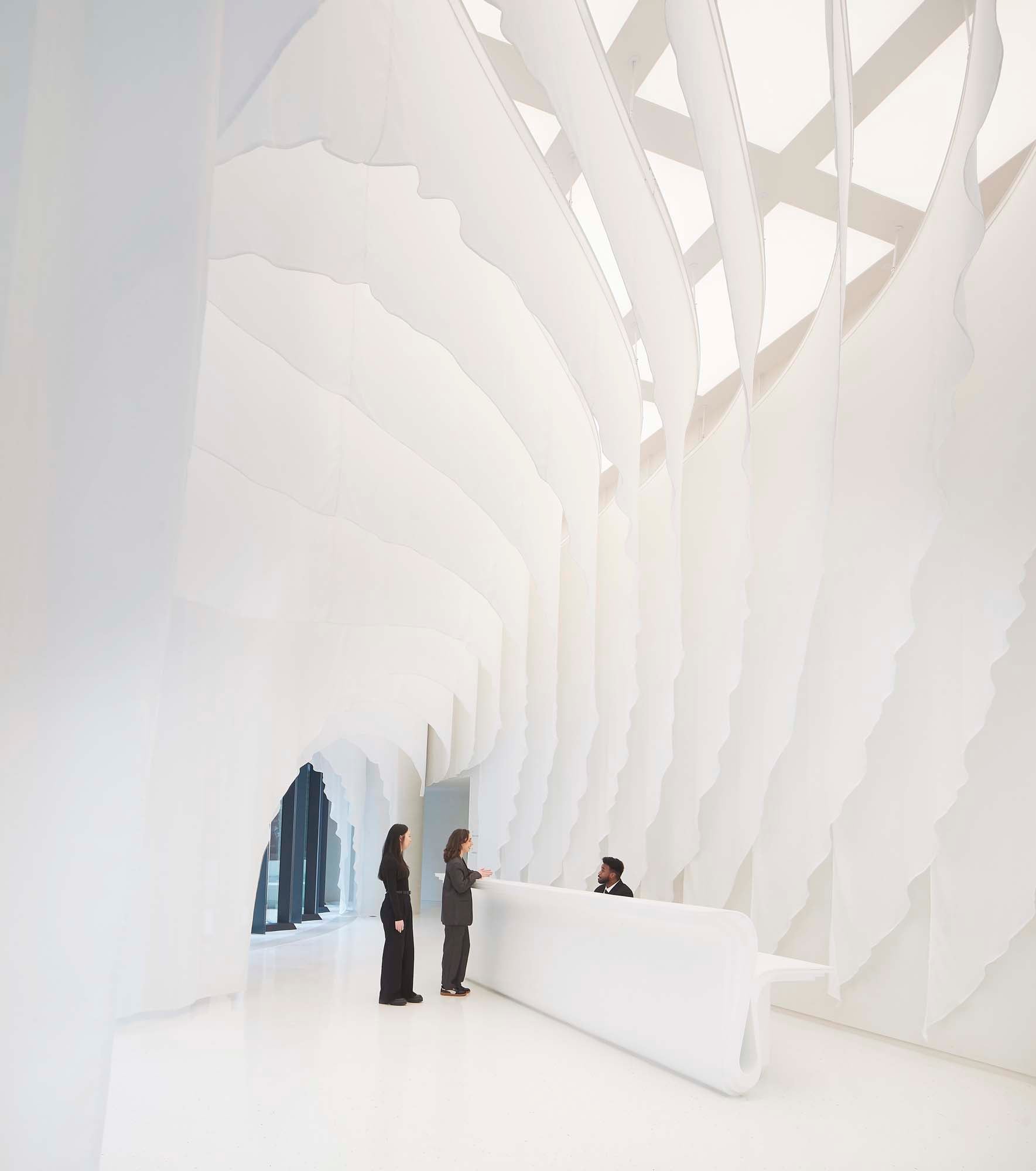
The church’s exterior and its primary sanctuary, both designated heritage spaces, were restored to their original appearance while undergoing extensive seismic upgrades, including excavation below the existing structure to create new usable space. In the church’s non-listed Pinder Hall, previous insertions were removed to restore the original 1911 volume, while the interior was reimagined with a textured white palette that exposes original wood structure and supports a wide range of uses, from concerts to weddings.
On the north side of the site, people experiencing homelessness line up beneath an overhang to access meals and services. That same canopy also marks the entrance to the parking garage, where residents arrive by car. According to Revery director Amirali Javidan, the overlap was purposeful. “It reflects the reality of the city. All of these needs exist together, whether architecture chooses to recognize them or not,” he says.
Rethinking the Residential Tower
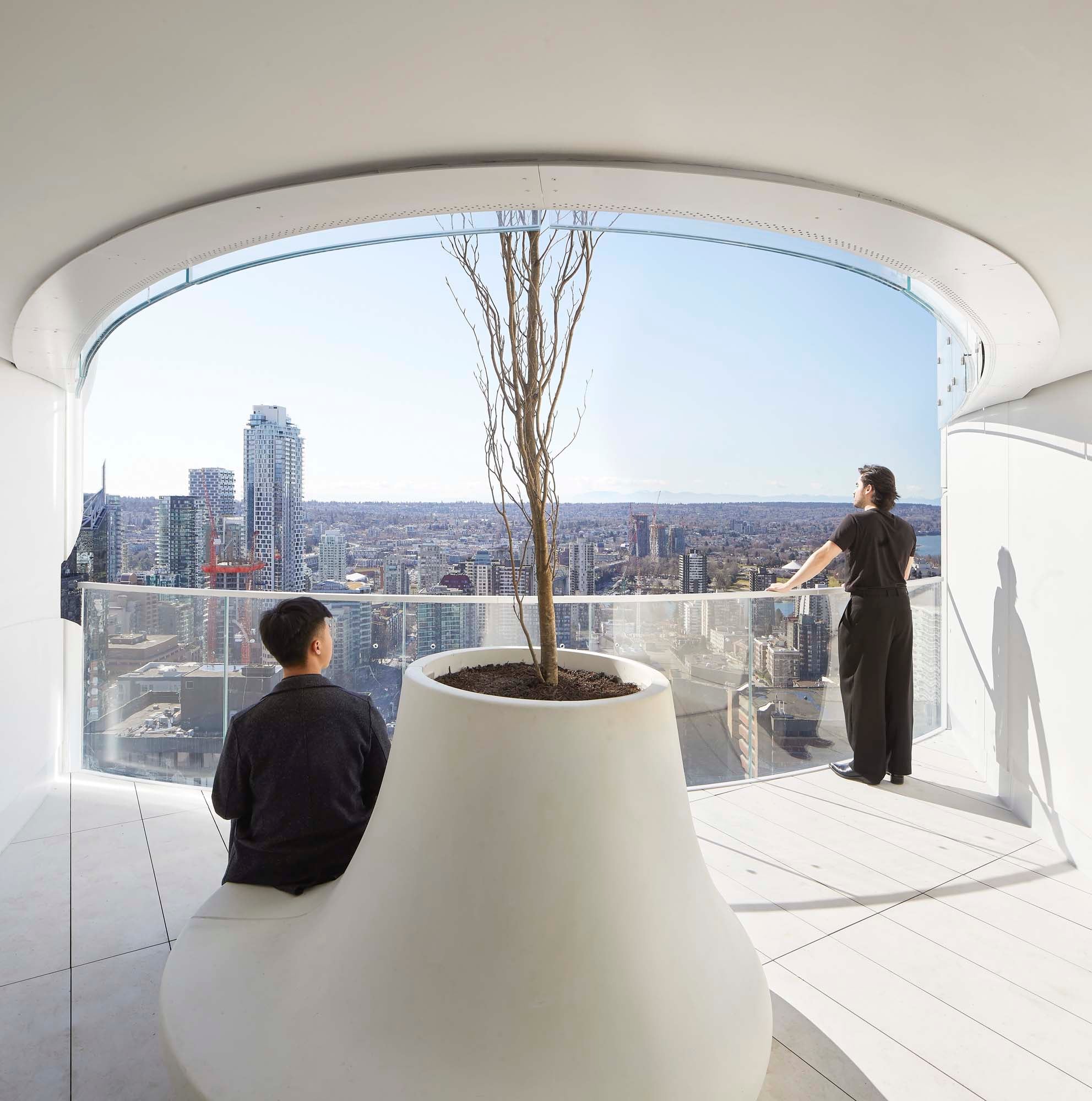
Above the ground, Butterfly continues to explode Vancouver’s typical tower expectations, like sealed corridors, artificial lighting, and privatized amenity floors. Each residential level is organized around open-air breezeways—which Revery calls sky gardens—that cut through the center of the building. Residents step out of the elevator directly into daylight, fresh air, and planted communal space, not enclosed hallways.
“You arrive into light and air,” says Kokalov. “It’s a small shift, but it affects how people behave, how long they stay, and whether they talk to each other.” Seating is built into planters, trees appear every few floors, and views extend outward in multiple directions.
Eliminating enclosed corridors also reduces lighting and mechanical loads while improving natural ventilation. Combined with high-performance glazing, insulated precast concrete panels, and connection to Vancouver’s district energy system, The Butterfly achieves a roughly 45 percent reduction in energy use compared to baseline standards, with greenhouse gas emissions reductions approaching 70 percent, says the firm.
Rather than subdividing apartment units into rigidly defined rooms, the architects used glass partitions and soft curtains to allow spaces to shift over time. Secondary bedrooms can function as dens, guest rooms, or extensions of the living space, maintaining acoustic separation while maximizing daylight and wide views across the city.
The building’s petal-like form—alternately described, says Kokalov, as (like its name) a butterfly, a pair of twisting towers, or even a set of pipe organs—emerges from similar performance-driven thinking. Curved balconies reduce solar gain while providing generous outdoor space. Sculpted massing improves aerodynamics, reducing wind and seismic demands and allowing for a slimmer structural core. That translates into more usable area within local zoning’s fixed floor plate and height limits.
A 50-meter-long fifth-floor pool bridges the podium roof and the tower’s amenity level. Enclosed in a prefabricated concrete-and-glass structure, it takes advantage of natural shading from surrounding buildings, reducing cooling loads while maintaining openness and views. Fitness spaces, lounges, and childcare facilities sit nearby.
In a city where residential towers are often evaluated as real estate products, The Butterfly suggests that high-end housing can engage civic responsibility and community connection without sacrificing comfort or value. The two can, in fact, strengthen each other.
Most people, says Venelin, assume its name, Butterfly, was based on that curved form. But he says it’s because “the butterfly is a symbol of change and transition—transformation.”
Would you like to comment on this article? Send your thoughts to: [email protected]
Latest
Projects
UC Berkeley’s Newest Building Is All About Human Interactions
The long-awaited project highlights uncomfortable truths about Los Angeles’s cultural sector and civic health.
Projects
ZD+A Brings a Modernist Mexico City House in Line with its Context
Architect Yuri Zagoin Alazraki reorganized the speculative house to respond to its site and create unique spaces for contemplation.