



July 3, 2026
SOM Creates a Breathing Building
Designing a breathing building requires a nuanced understanding of how light and air move both around and within its confines. This is typically informed by the structure’s physical context, including climate conditions, hydrology, and ecology, with the desired outcome being a building that is symbiotic with its environment. This complex process, however, is not entirely reliant on passive systems. After all, one’s lungs are only as healthy as the things the person chooses to consume and surround themselves with.
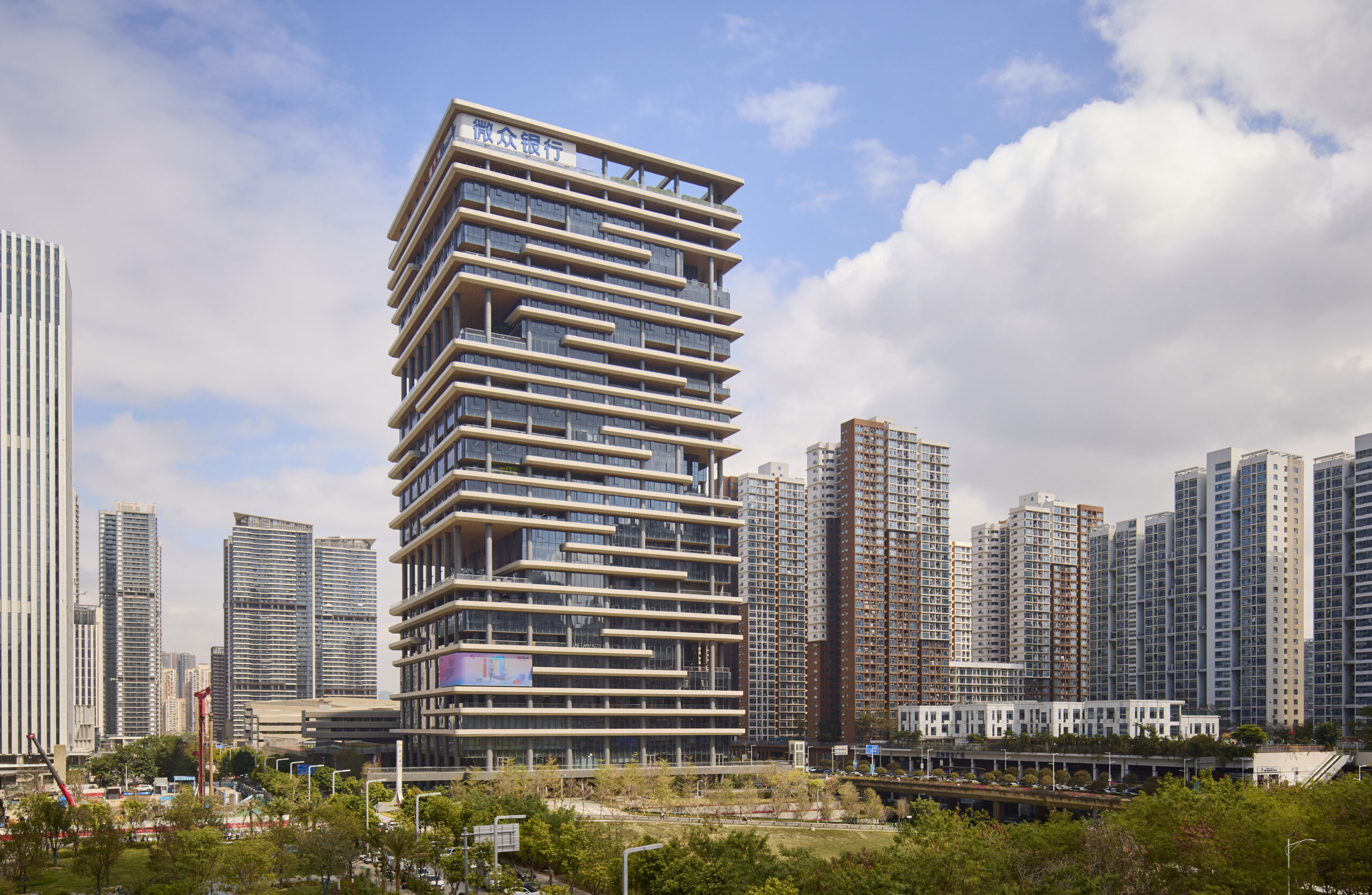
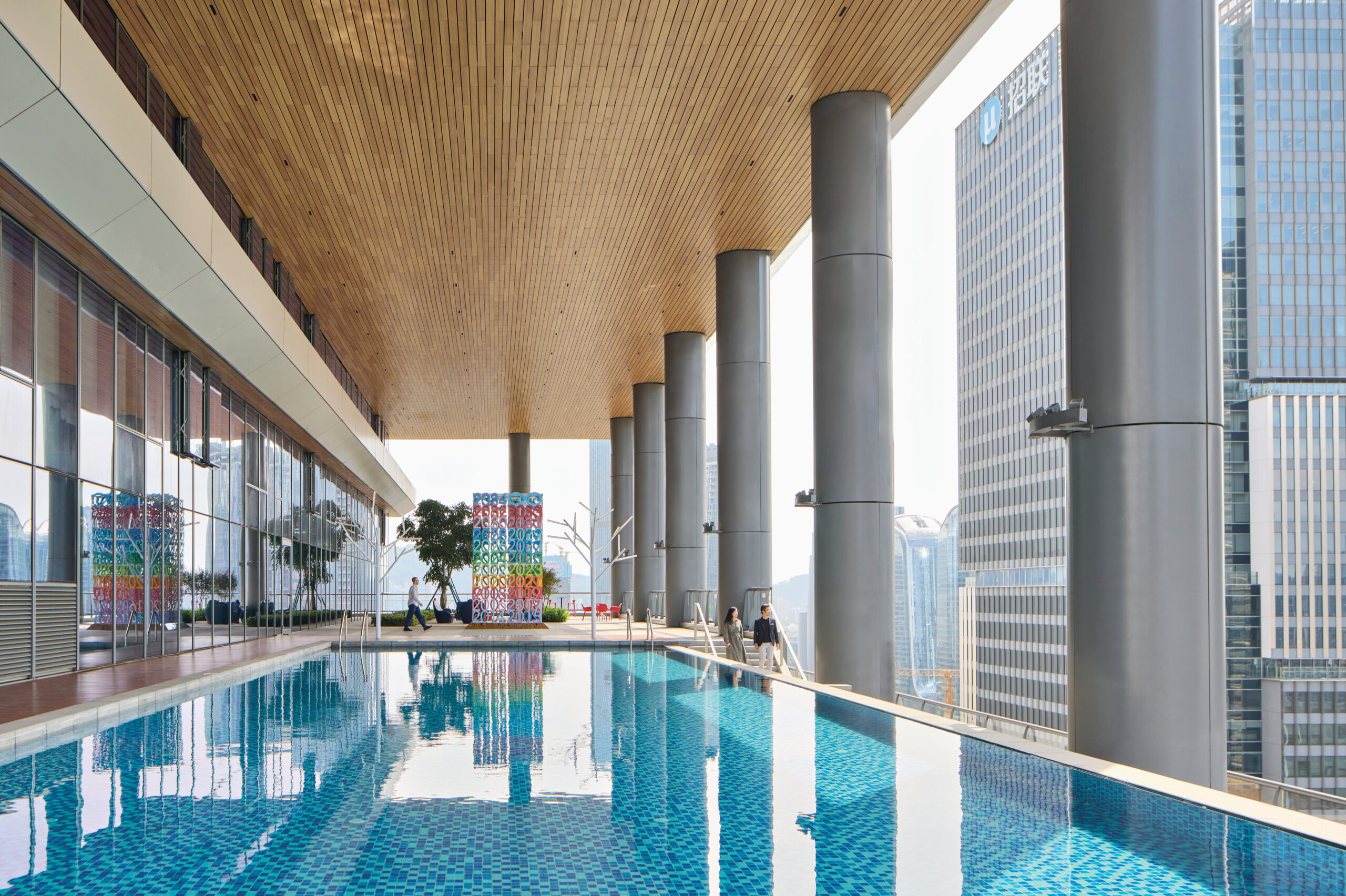
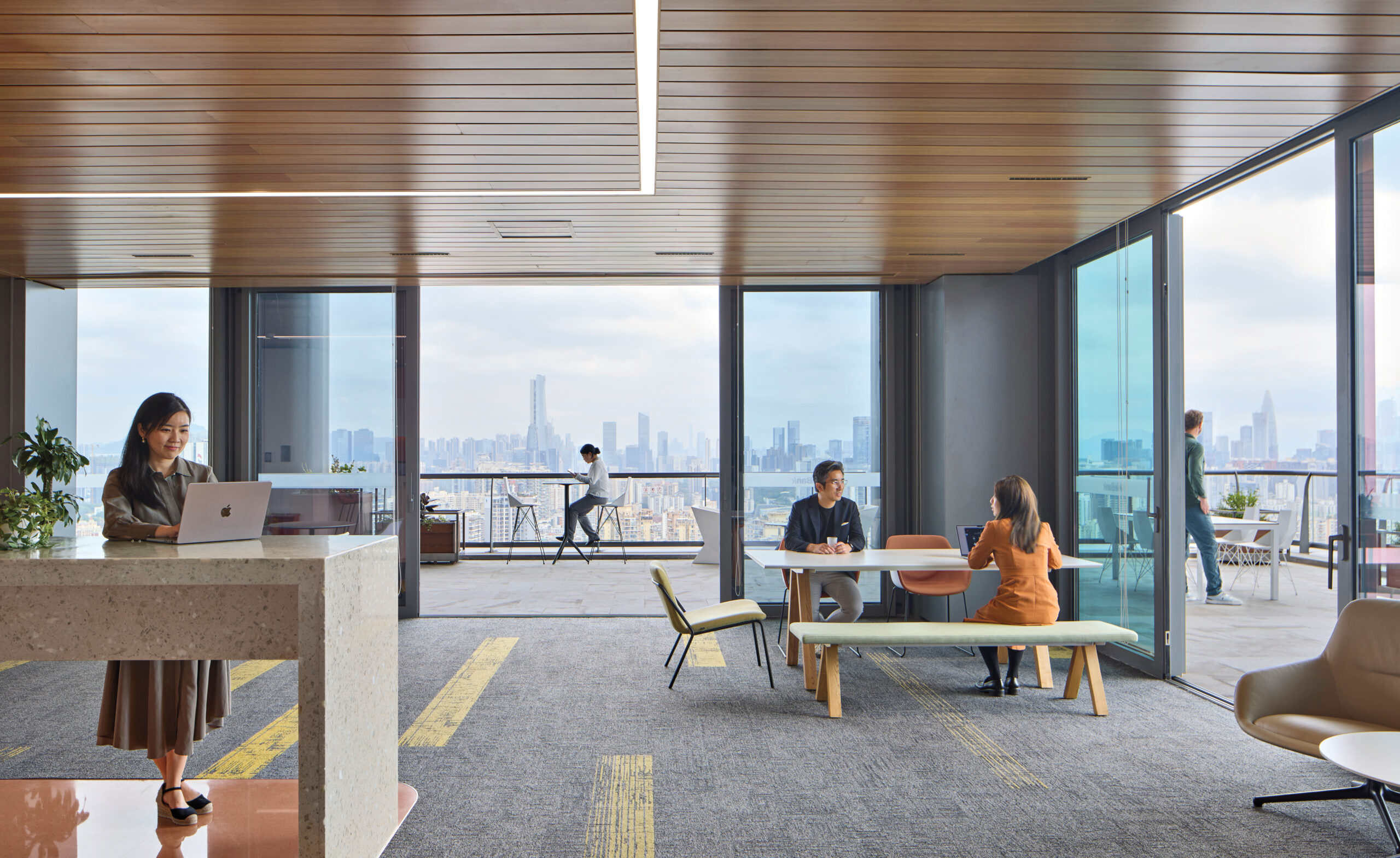
Principals at SOM heeded this distinct sustainability challenge when designing the new 30-story corporate headquarters for WeBank, China’s first digital-only bank, which opened last year in Shenzhen. Rather than conceive a traditional, hermetically sealed skyscraper, which would have matched the city’s skyline seamlessly, SOM proposed something “porous” and “spongy,” according to design partner Scott Duncan. “We actually designed a much shorter building than what [the client] asked for,” he says. What WeBank did specify was “lots of indoor-outdoor connectivity” and “a healthy work environment.” SOM responded with a scheme that “was more horizontal in nature,” an asymmetric composition of floating planes that give way to large terraces with protective overhangs and palpably blur the boundaries between inside and out.
A Language of Porches
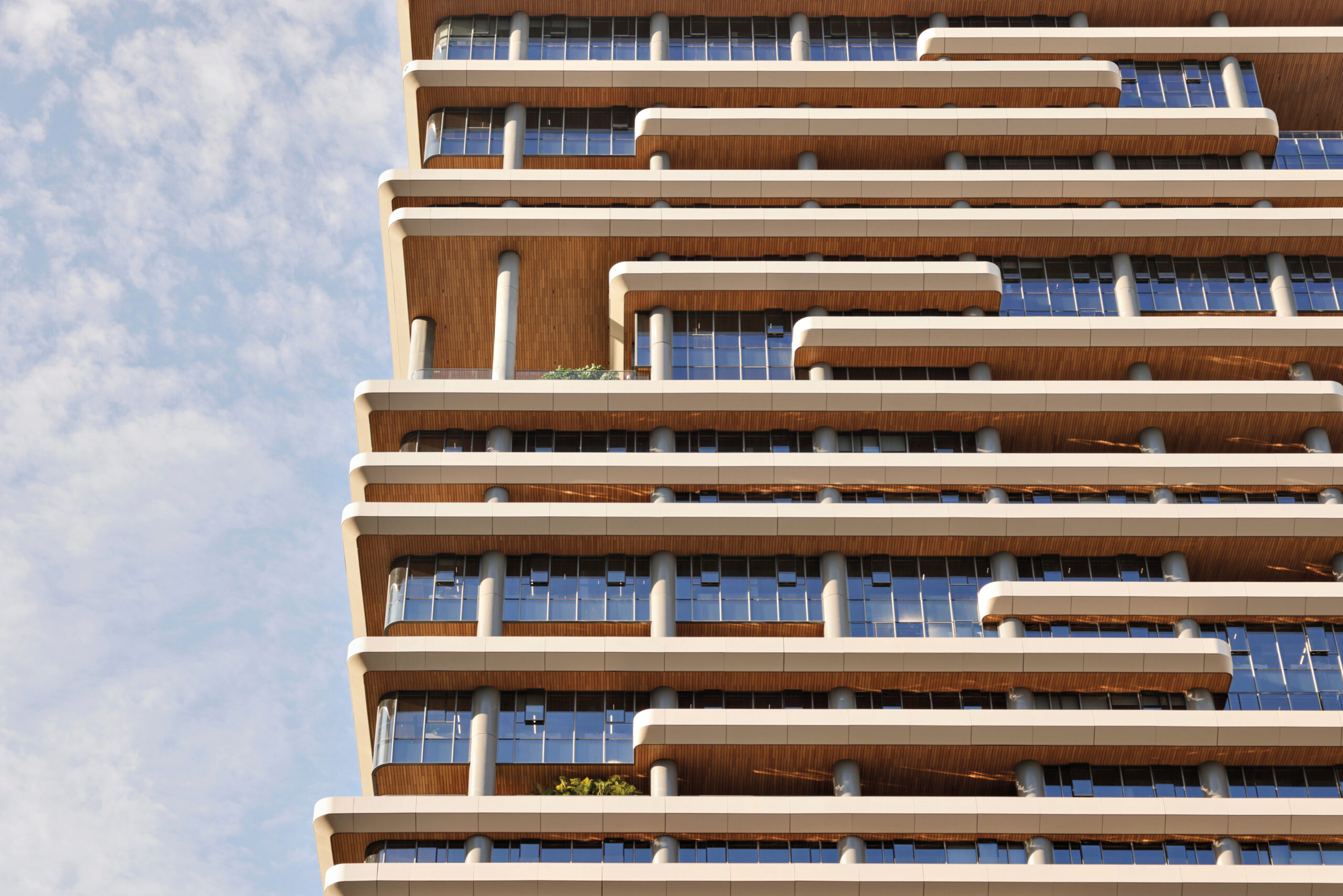
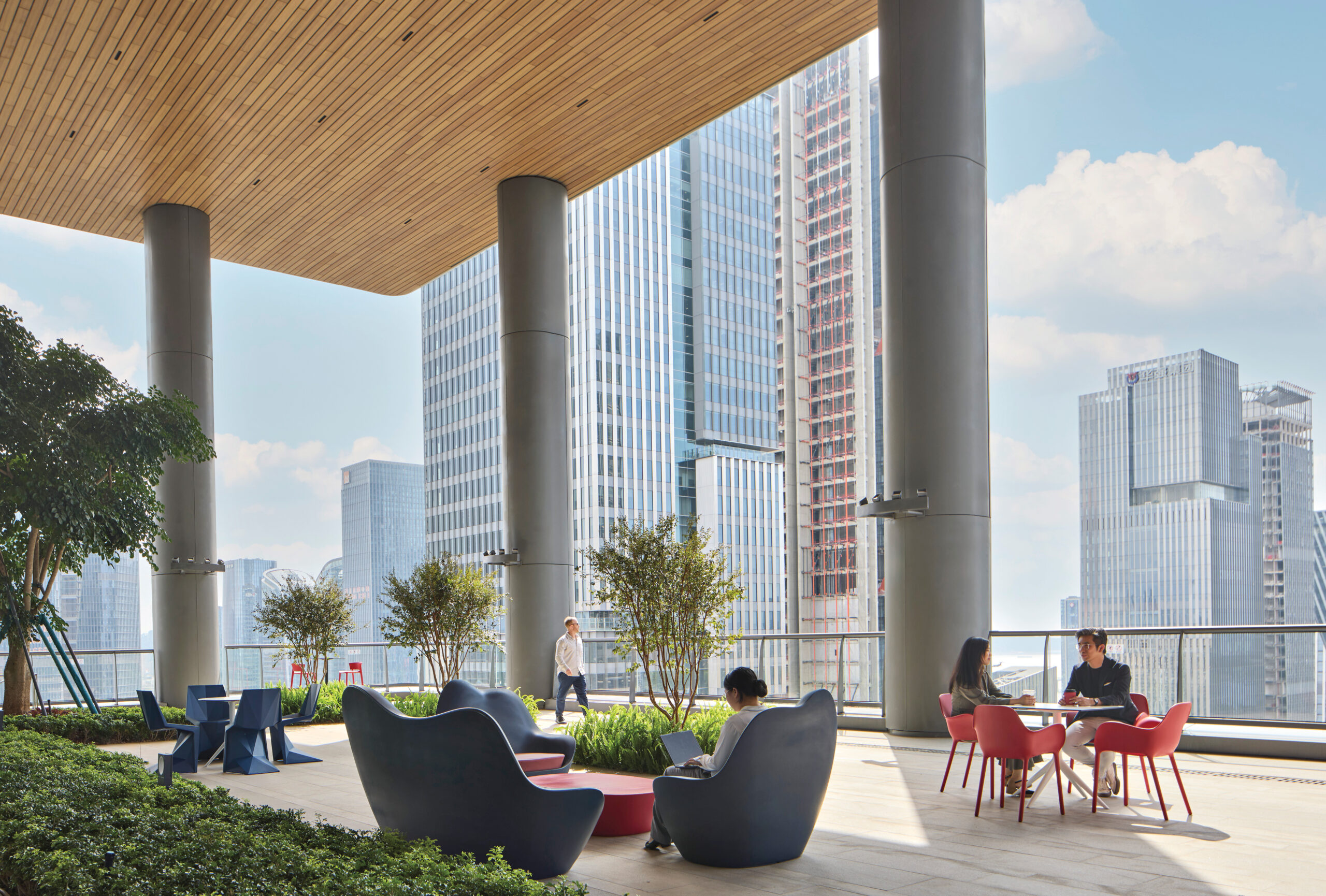
“Shenzhen’s weather is really beautiful for most of the year, and you can just be outside or open the windows,” Duncan says. “So, we created this language of porches that continues from the base to the top of the building.” Of course, WeBank HQ’s well-calibrated indoor environmental quality (IEQ) relies on more than simple cross ventilation.
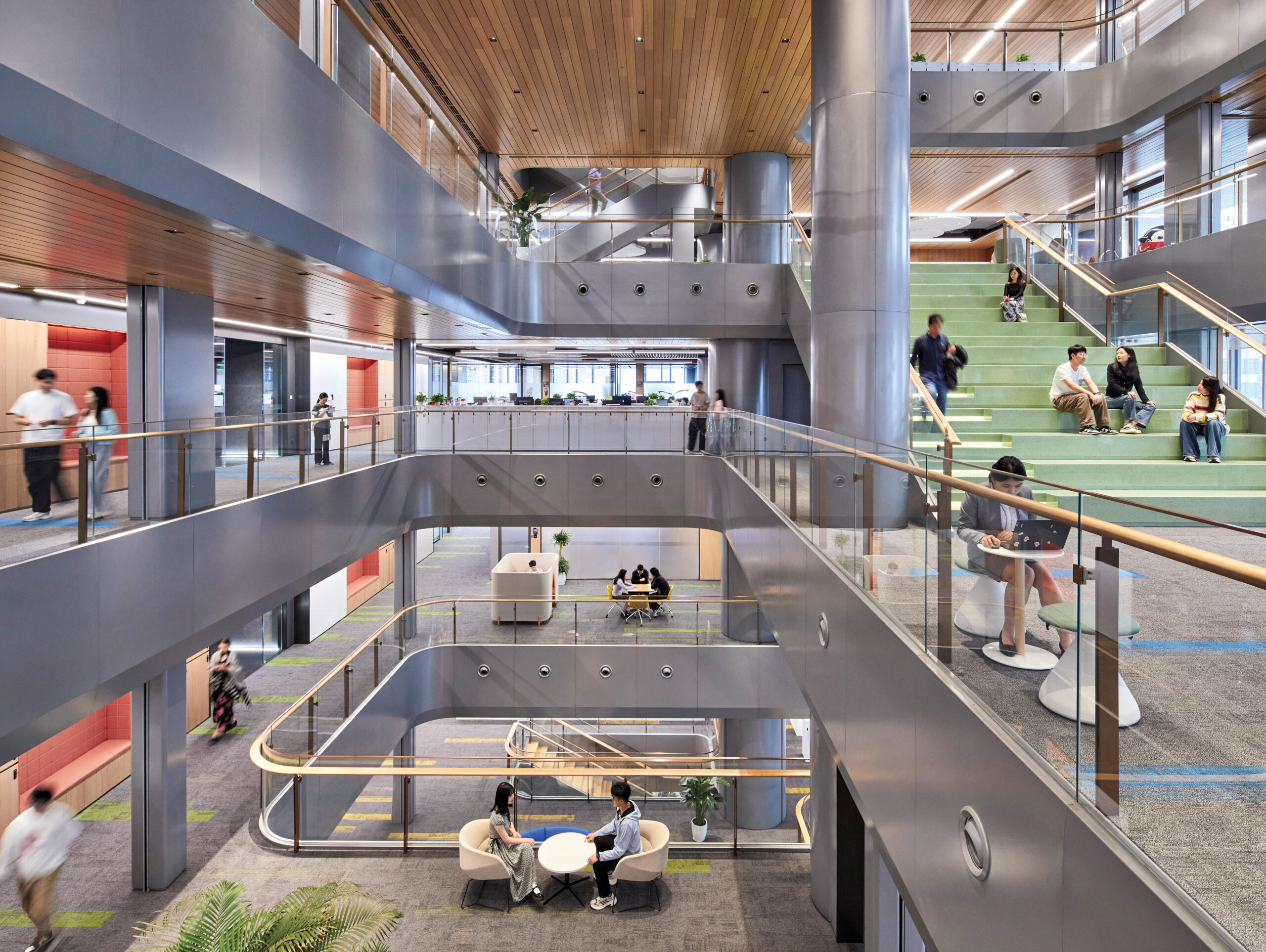
Intercutting the building’s expansive, 45,000-square-foot floor plates are a series of “intentionally misaligned” gaps that give occupants lines of sight between floors and different “neighborhoods” that comprise WeBank’s flexible workplace. The exact placement of these vertically aligned gaps was also critical to SOM’s Computational Fluid Dynamics, which analyzed how air would move throughout the building.
Designing for optimal airflow was further aided by using push-out windows that are affixed to hinges instead of brackets, so that when opened, they run parallel to the fixed glass. “When wind hits the building, that air needs to go somewhere. Push-out windows allow for ventilation from almost any angle,” Duncan says.
Shenzhen also happens to be a coastal city in a subtropical zone, making it prone to high winds, monsoons, and heat waves. Such conditions were carefully factored in when designing and positioning the building’s recessed balconies, which keep direct sunlight from hitting the windows and provide passive cooling, as do the trees and plantings on the porches and roof terrace. “This building was specifically designed for dynamic thermal comfort,” says Luke Leung, a firm principal and an American Society of Heating, Refrigerating, and Air-Conditioning Engineers (ASHRAE) fellow. “Whenever the outdoor air quality and thermal conditions are appropriate, then we allow them to come into the building,” he says.
Interestingly, WeBank HQ’s hybrid of mechanical and natural ventilation systems align with the relatively new ASHRAE Standard 241, an important post-COVID-19 building performance standard designed to regulate and filter out infectious aerosols and other airborne contaminants by circulating larger-than-average percentages of outside air. (Mechanical and natural systems achieve six air changes throughout the building every hour.)
Creating a Probiotic Workplace
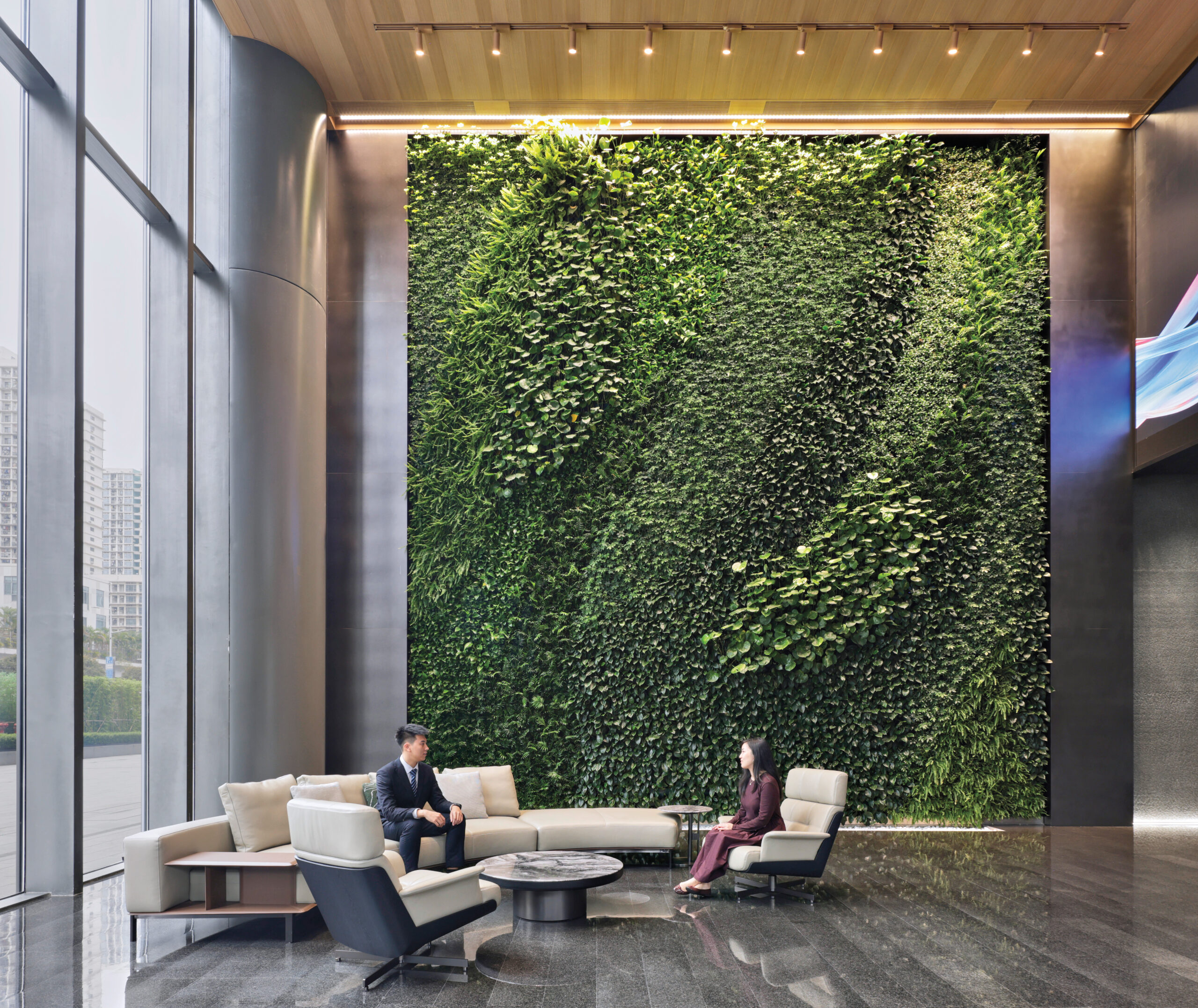
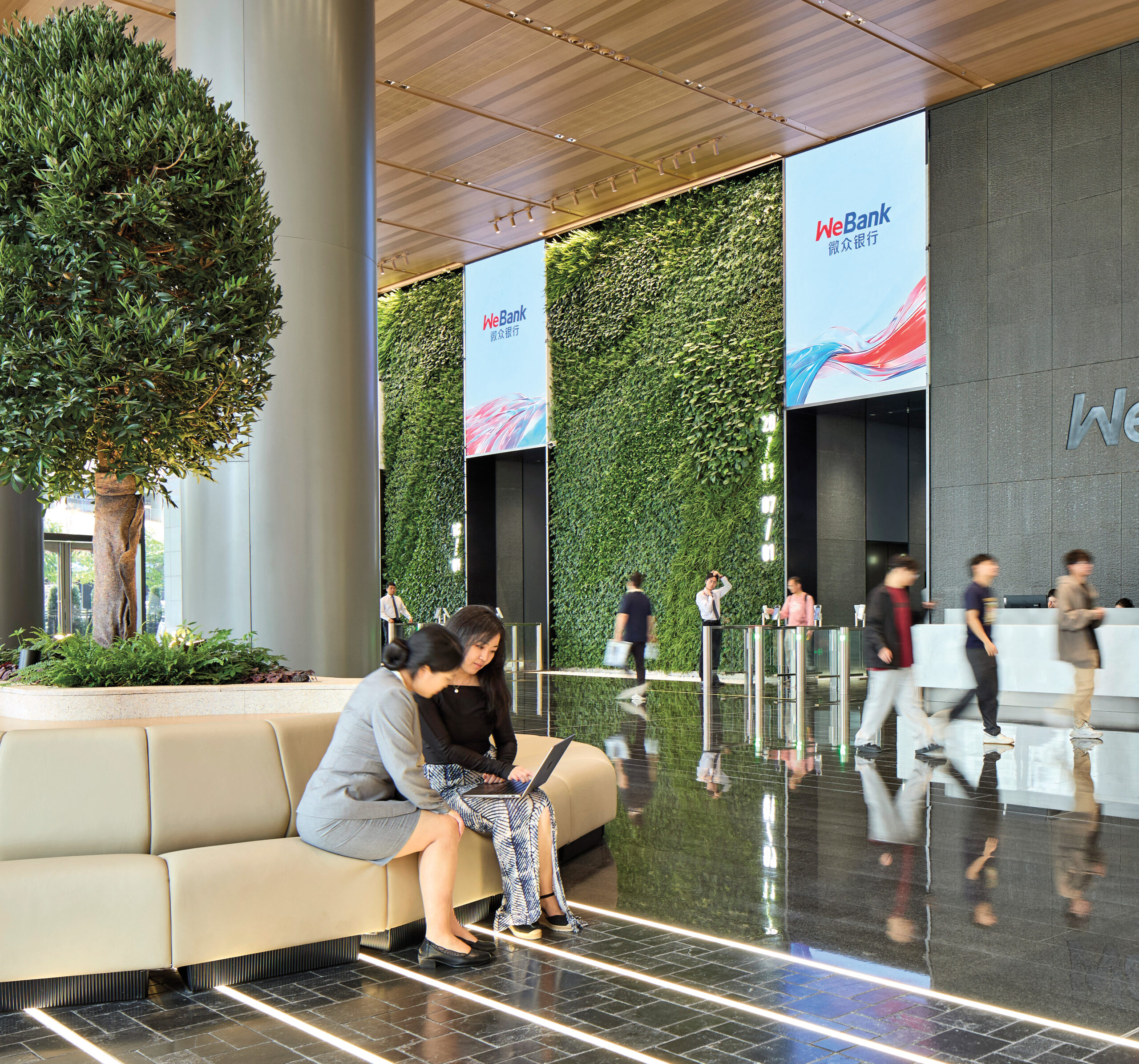
Once a building literally opens itself to the elements, it invites nature in and all that comes with it. If the conditions are right, “we give our bodies more access to good germs, good bacteria, and not just to who is sitting next to us,” Duncan says. It was this thinking that led the SOM team to envision what they call “a probiotic building.” This extends not only to the building’s indoor air quality but to the site’s natural cycles.
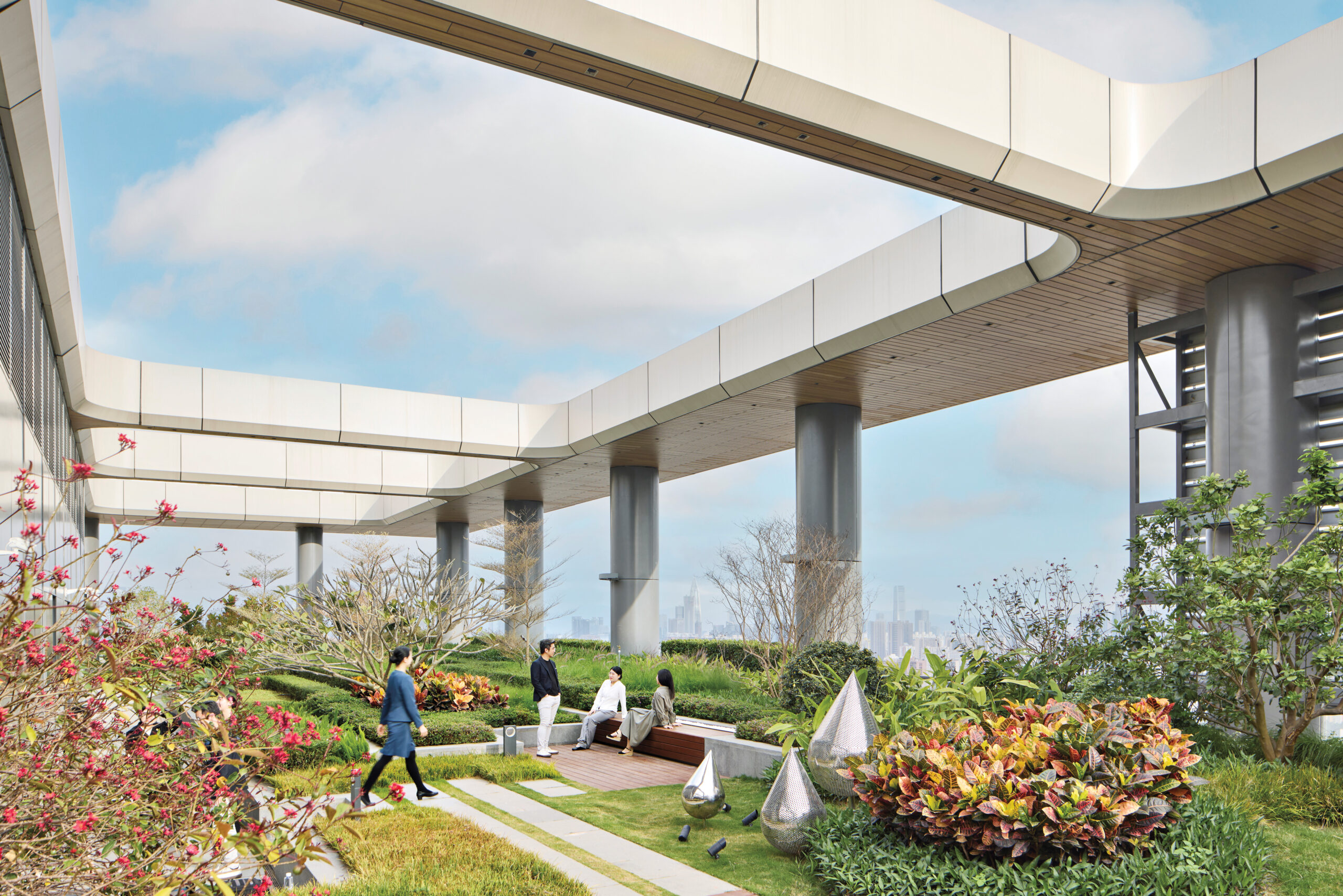
WeBank HQ’s “substantial and lush” roof deck is among the building’s marquee elements that embody this outlook. “We thought of it more as a habitat than a decorative garden. It’s big enough that birds roost there, and pollinators come,” Duncan says. The diverse mix of native plantings invites diverse microbials, according to Leung. The notion of a breathing building also hinges on being a responsible steward of water. Any precipitation that falls on the building is captured through grates atop the overhangs and used to irrigate the plantings. Excess water is directed to a cistern that interconnects with the city’s stormwater management systems, thus reinforcing Shenzhen’s reputation as a “sponge city.”
The respiration analogy is thought provoking for many reasons, not least that it invites us to consider the alternative. “We don’t talk about bleeding buildings,” Duncan says, possibly suggesting that we should. Indeed, if a building is not breathing, as in, if it’s not being an active steward of the natural systems that support it and the people who occupy it, it is very likely leaching the very things that sustain life.
Would you like to comment on this article? Send your thoughts to: [email protected]
Latest
Viewpoints
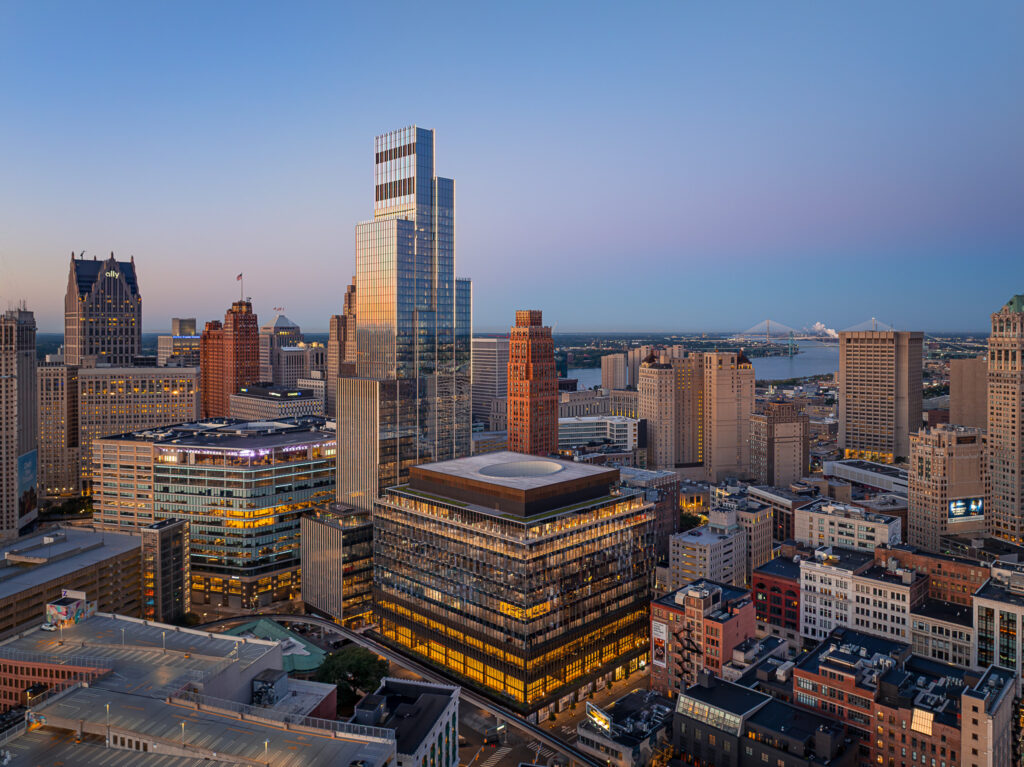
Detroit Month of Design: A City’s Work in Progress
Now in its 16th year, the celebration offers insights into the Motor City’s ongoing accomplishments without glossing over its hurdles.
Projects
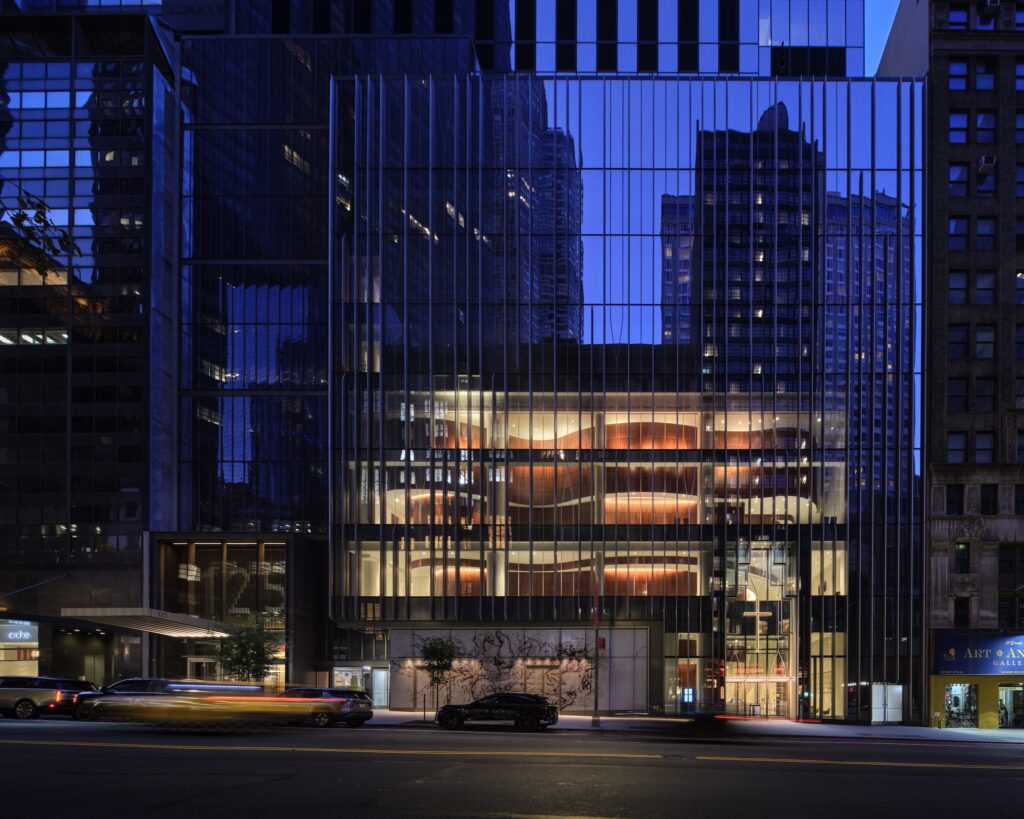
How a Hybrid Building Helped an Historic Manhattan Congregation Remain in Place
On Billionaire’s Row, FX Collaborative designed a new home for Calvary Baptist Church combined with an office tower.